

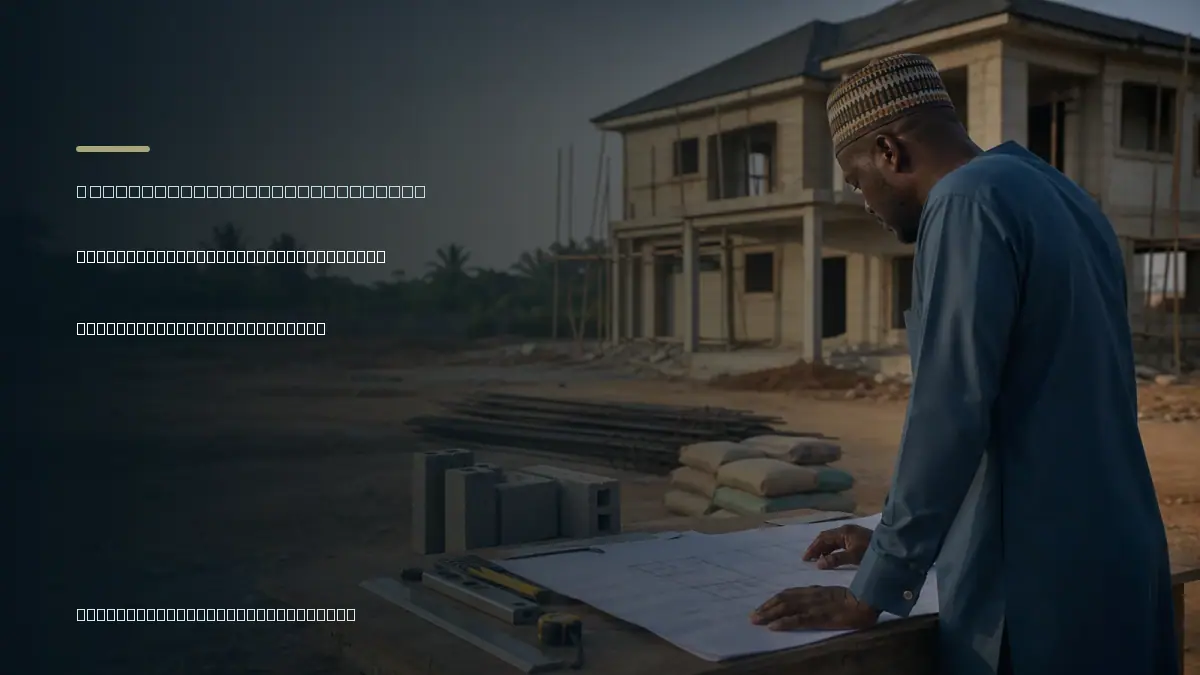
So, like, if you check local Nigerian engineering sites, contractor groups, and Nairaland threads, you will see site engineers and builders discussing this exact topic.
You know how every site supervisor has their own style? On paper, the math says one thing, but on a real Nigerian site, human factors like site wastage, sand quality, mortar thickness, and whether your mason is laying 9-inch or 6-inch blocks change the numbers real fast.
What Real Masons & Contractors Say
1. Cement Needed to Lay 1,000 Blocks
- For 9-inch blocks: A standard 1:6 mortar mix (1 bag of cement to 6 headpans of sharp sand) uses roughly 1 bag of cement for every 45 to 50 blocks. So, to lay 1,000 blocks, you will need about 20 to 22 bags of cement.
- For 6-inch blocks: Since 6-inch blocks have a narrower bed, 1 bag goes further, usually around 55 to 60 blocks. So, you are looking at 16 to 18 bags of cement.
- Site reality (The "Extra Bag" factor): Most Nigerian masons usually ask for 25 bags per 1,000 blocks. Why? So they can cover spillages, extra-thick bed joints, and filling gaps inside hollow blocks.
2. Sharp Sand Needed for 1,000 Blocks
- The Math: Using the 1:6 mix ratio, you need 6 parts of sharp sand for every part of cement.
- The Tonnage: For 20 to 22 bags of cement, you will need roughly 3.5 to 4.5 tonnes of sharp sand.
- The Tipper Load: In local market terms, sharp sand is usually sold by the tipper (for example, 5-tonne, 10-tonne, or 20-tonne trucks). A standard 6-wheel tipper (about 5 to 7 tonnes) will be more than enough to lay 1,000 blocks with extra sand left over.
Comparison: Moulding vs. Laying
So, a lot of people get confused on Nairaland because they mix up moulding blocks with laying blocks. Here is how the cement numbers compare so you do not get mixed up on site:
Moulding 1,000 Blocks
- 9-inch Blocks: 25 to 29 bags (yields ~35 to 40 blocks/bag)
- 6-inch Blocks: 20 to 22 bags (yields ~45 to 50 blocks/bag)
- Sand Type: Requires clean, fine or sharp sand mix.
Laying 1,000 Blocks
- 9-inch Blocks: 20 to 22 bags (lays ~45 to 50 blocks/bag)
- 6-inch Blocks: 16 to 18 bags (lays ~55 to 60 blocks/bag)
- Sand Type: Uses coarse sharp sand for mortar.
Site Tips from Nigerian Builders
- Watch out for "Watery" Sand: If your sharp sand has too much clay or mud in it, the mason will ask for extra cement just to get the mortar to bond properly. Always inspect the sand when the tipper dumps it.
- Mortar Joint Thickness: Some bricklayers like laying 25mm (1 inch) thick mortar joints. It is something to keep an eye on them so they stay uniform.
- Don't buy exact quantities: Always add a 5% to 10% allowance for broken blocks, spilt mortar, and wastage on the floor. Buy 24 bags of cement for 1,000 9-inch blocks just to be safe.
Instead of guessing material quantities or relying strictly on rule-of-thumb calculations that lead to overbuying, you can run accurate estimates directly from your phone.
Build Estimate App has a dedicated tool that gives you a clear bills of quantities. You can adjust local prices, customize mix ratios and share transparent breakdowns with your site team before purchasing materials. Download Build Estimate for Android from Google Play to get started on your next project.